
Supporting Super-Early Stage Entrepreneurs in Europe
The trend of supporting super-early stage entrepreneurs in Europe has gained significant momentum. In March, “Project Europe” was launched with a $10 million fund to support founders under the age of 25, drawing inspiration from the ‘Peter Thiel Fellowship’ model. Now, a new fund, EWOR, has been introduced with a substantially larger investment of $68 million.
EWOR, which stands for “entrepreneurship without risk,” has launched its own founder fellowship program, committing €60 million to offer selected founders €500,000 in capital for a 7% stake. In comparison, Project Europe offers €200,000 for a 6.66% stake. EWOR claims that its alumni have gone on to raise €1 million to €11 million during the fellowship period.
The funding will be allocated to 35 entrepreneurs annually, targeting visionaries, technical prodigies, driven operators, and serial entrepreneurs. These fellows will receive virtual-first support, including 1:1 mentorship with a ‘unicorn founder’ for 1 to 5 hours per week, as well as access to a network of 2,000 mentors, VCs, and subject matter experts.
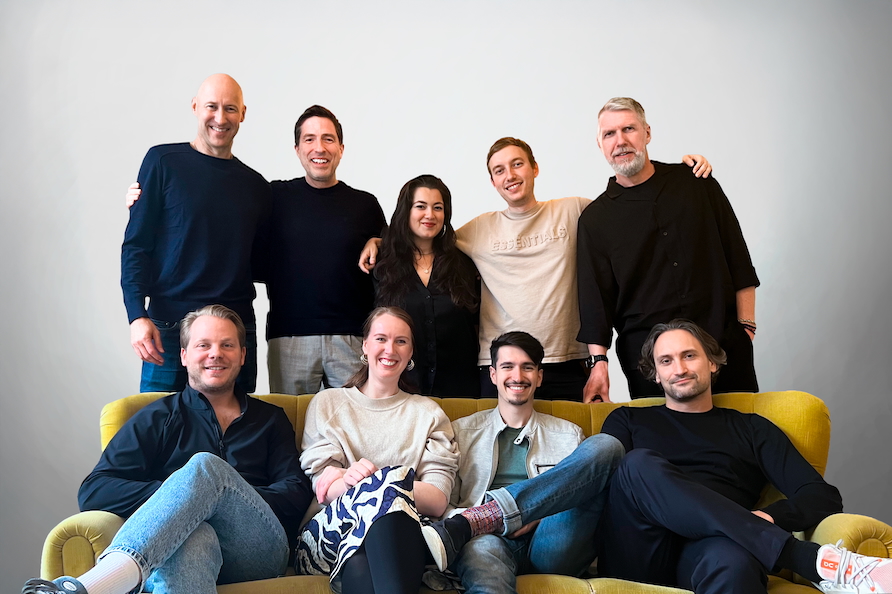
EWOR was founded in 2021 by six entrepreneurs who previously worked at companies like SumUp, Adjust, ProGlove, and united-domains. The team includes Daniel Dippold, Alexander Grots, Florian Huber, Petter Made, Quinten Selhorst, and Paul Müller.
In an interview with TechCrunch, Daniel Dippold highlighted the differences between EWOR’s fellowship program and Project Europe. While Project Europe focuses on entrepreneurs with just an idea, EWOR offers two fellowships: ideation and traction. Dippold stated, “We can literally start at inception, no problem.” EWOR’s investment includes €110,000 from EWOR GmbH and an additional €390,000 from the investment fund via an uncapped convertible note or similar instrument.
One notable example of a previously backed startup is Aspect Health, which was built in Moldova, raised funding in Silicon Valley and New York, and ended up with a $50 million valuation. Dippold emphasized EWOR’s unique approach, saying, “We have 50,000 applicants in a vector database that understands every intricate detail of a person’s GitHub. So if you need to hire a person with 10,000 lines of code and Rust skills, I can find that person with one query.”
Dippold also shared EWOR’s software-driven approach, stating, “We run evil like a software company, build measure, Learn, Build measure, Learn, Build measure, learn… The only thing that matters is it needs to be the most useful thing any founder can possibly do.”
Ten founders have been accepted into this year’s cohort, including UK-based Mark Golab, who is applying 3D printing technology to organ transplants with Cambridge Surgical Models, and Vienna-based Viktoria Izdebezka, who is working on lead generation with Salesy.
Previous EWOR fellows include notable entrepreneurs such as Ricky Knox, who achieved two 9-figure exits with Azimo and Tandem Bank, and Tim Seithe, who led Tillhub to a bootstrapped exit at almost €100 million.
EWOR fellow Jörgen Tveit, founder of Thaleron, praised the program, stating, “The founders of EWOR are deeply technical and understand the challenges of building a world-changing tech company.”
Source Link